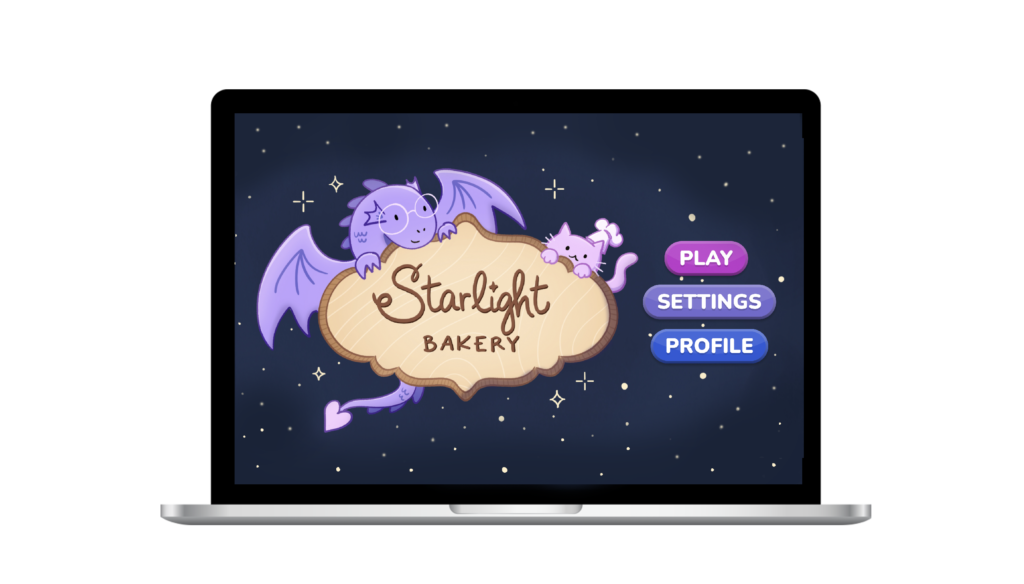
🌟 Starlight Bakery
A cozy, accessibility-first game designed for emotional regulation & Neurodivergent players
This case study is part of my ongoing journey into Game UX, Accessibility Design, and Emotionally Supportive interactive systems.
Starlight Bakery is a cozy game concept developed under Cozy Dragon Games, with the goal of creating a gentle, low-pressure space specifically designed to support neurodivergent players (including autistic and ADHD players) through calm mechanics, predictable systems, and emotionally affirming interactions.
This project explores how UX principles, psychology, and accessibility can shape not only usability, but emotional safety within a game world.
🌌 Introduction
Starlight Bakery is a cozy, narrative-driven game set in a small nighttime town illuminated by glowing lanterns and constellations.
The player runs a magical bakery that opens after sunset. Instead of rushing orders or competing for profit, the player welcomes tired townsfolk, listens to how their day has felt, and bakes comfort desserts tailored to their emotional state.
The bakery becomes a soft refuge and a space where overstimulated, overwhelmed, or lonely characters can regulate, reflect, and reconnect.
This project was developed as a UX-first game concept, with systems intentionally designed to:
- Reduce cognitive overload
- Support emotional regulation
- Avoid punishment mechanics
- Encourage short, restorative play sessions
👩🏻💻 Design Pillars
The experience of Starlight Bakery is built around three core pillars:
1. Emotional Safety Over Performance
There are no failure states, no burnt desserts, and no time penalties. Progression happens through care, presence, and consistency rather than speed or optimization.
2. Predictable Systems
Neurodivergent players often benefit from structure and clarity. Recipes, customer preferences, and daily rhythms follow clear, learnable patterns without sudden spikes in complexity.
3. Gentle Agency
Players choose how to spend their time: baking, decorating, reorganizing shelves, stargazing, or simply listening to customers. No activity is mandatory.
🧁 Theme & Inspirations
Starlight Bakery draws inspiration from cozy and emotionally rich games, including:
- Stardew Valley (community and slow progression)
- Coffee Talk (dialogue-driven comfort)
- Spiritfarer (care-centered mechanics)
- Animal Crossing: New Horizons (low-stress routine and autonomy)
Visually, the world blends cozy art with warm lighting and nighttime palettes. The bakery glows gently against a dark sky, symbolizing safety within overwhelm.
Conceptually, the game is inspired by:
- Sensory-friendly environments
- Autism-informed design principles
- Cozy domestic rituals (tea, baking, rearranging shelves)
🍰 Play Experience (UX Goals)
The intended player experience is:
- Calm and regulation-supportive
- Predictable and structured
- Low-demand and low-pressure
- Emotionally affirming
The game avoids countdown timers, combo systems, performance grading, sudden difficulty spikes, loud audio cues or flashing UI. Instead, it supports drop-in, drop-out play, short sessions after overwhelming days, routine-building through repeated mechanics
☕ Emotional Journey
Beginning:
The player discovers the quiet bakery at twilight. The space feels small but safe.
Mid-game:
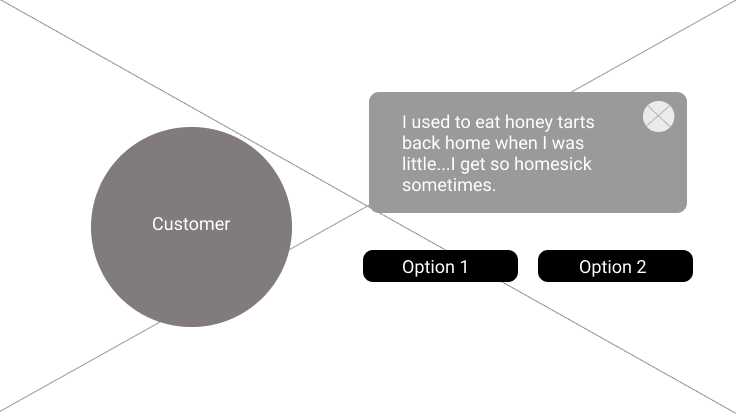
Familiar customers return. The player begins to recognize patterns in their needs such as “mint tea for anxious evenings” or “honey tarts for homesick days.”
Reflection moments:
Dialogue touches on themes of burnout, masking, belonging, and sensory overload and is handled gently, without heavy exposition.
Ongoing play:
The bakery slowly fills with small tokens of care: thank-you notes, donated ingredients, constellation charms.
Progress feels steady, never urgent.
🎮 Core Game Loop
The core loop is readable and regulation-friendly:
Welcome customer → Listen to how they’re feeling → Select or bake a comfort recipe → Receive gratitude + starlight points → Unlock new recipes, décor, or ambient options → Strengthen relationship
Progression is tied to:
- Relationship depth
- Recipe collection
- Time spent in-game
- Acts of consistency
There is no “win” condition. The bakery grows as long as care continues.
💫 Sensory Settings Menu
Players can adjust:
- Text speed
- Text size
- Background music intensity
- Animation softness
- Particle effects
- Lighting brightness
- Dialogue pacing
🥖 Predictable Daily Rhythm
Each in-game day follows the same soft structure:
Opening routine → 2–4 visitors → Optional baking/decorating → Closing reflection screen
Predictability supports cognitive ease.
🍩 UI & Interaction Design
The UI was designed to feel like a cozy world with loveable characters and is intentionally minimal and diegetic.
💻 Key UX decisions:
- Recipe book functions as the primary menu
- Single primary interaction button
- Soft transitions between screens
- Minimal HUD with only relationship hearts and current recipe
No flashing alerts, red error states. or loud success animations.
🔑 Accessibility Considerations
- Adjustable text size and line spacing
- High-contrast UI toggle
- Keyboard, controller, and simplified control scheme
- No timed button prompts
- No permanent failure states
- Clear icon + text pairing
- Consistent layout hierarchy
The interface avoids visual clutter and cognitive overload.
🕹️ World Progression System
Instead of currency, players collect “Starlight”, a representation of warmth shared within the community.
Starlight unlocks:
- New recipes
- Ambient music tracks
- Bakery layout expansions
- Night sky constellations
- Comfort décor items
Progression is tied to:
- Consistency (returning regularly)
- Relationship depth
- Time spent in calm play
Being present matters more than optimizing.
👾 Why this Project Matters
Starlight bakery reflects my longterm goals of integrating Game UX, Accessibility, Autism-informed systems, Emotional Regulation theory, and Cozy game design.
As an Autistic woman, I wanted to create something from my own lived experience, as well as integrating Accessibility-first thinking, systemic emotional design, Neurodivergent-centered UX, calm interface architecture.
This project reflects my beliefs that games can function as soft regulation spaces, not just entertainment.
🎨 Wireframes & Flow Exploration
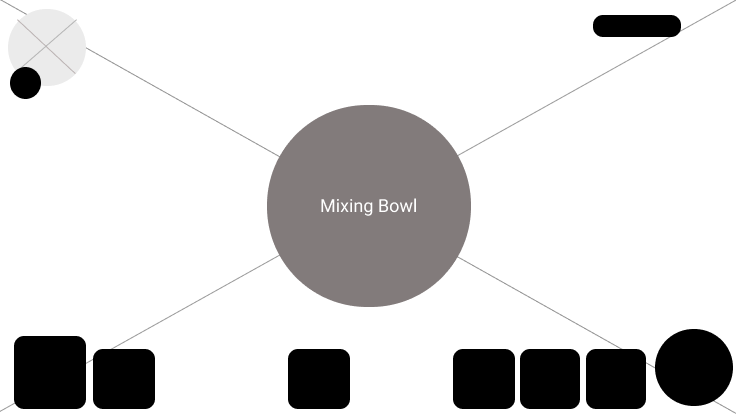
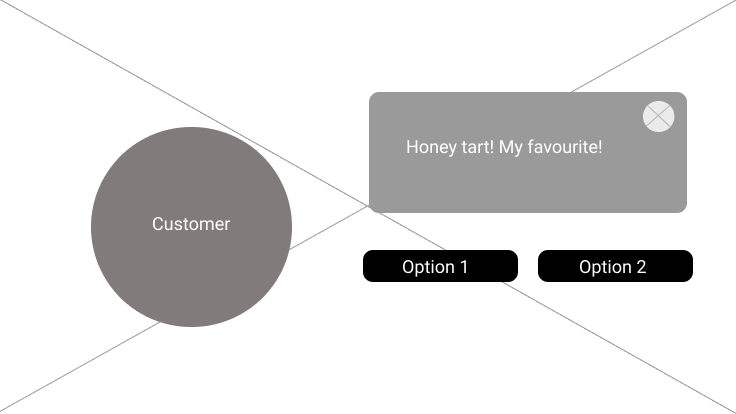
I created wireframes to help define clear information hierarchy, reduced cognitive load, consistent navigation patterns and sensory-safe UI layout.
Each screen prioritizes breathing room, readable typography, gentle animation, and logical navigation order.
The recipe book menu, dialogue system, and sensory settings screen were prototyped to validate flow clarity, menu discoverability, emotional pacing, and reduced friction.
The goal was to ensure usability and emotional comfort before visual polish.
⭐️ Final Thoughts
I’ve spent years playing cozy games, creating cozy art and even working on my debut cozy fantasy graphic novel, Side Quest!
As an Autistic Designer, I want to create games that are enjoyable but also help others with emotional regulation.
My hope is to keep working in this intersection of Games UX, Accessibility and Neurodivergent-friendly, cozy spaces.
🌠 What Next?
- Conduct further research into what kinds of games reduce executive dysfunction friction
- How to support players who struggle with decision fatigue
- How to handle rejection sensitivity
- Additional research on Autism sensory processing, executive function scaffolding, polyvagal thory and cognitive load theory and how these can be integrated into additional regulation mechanisms in games.